
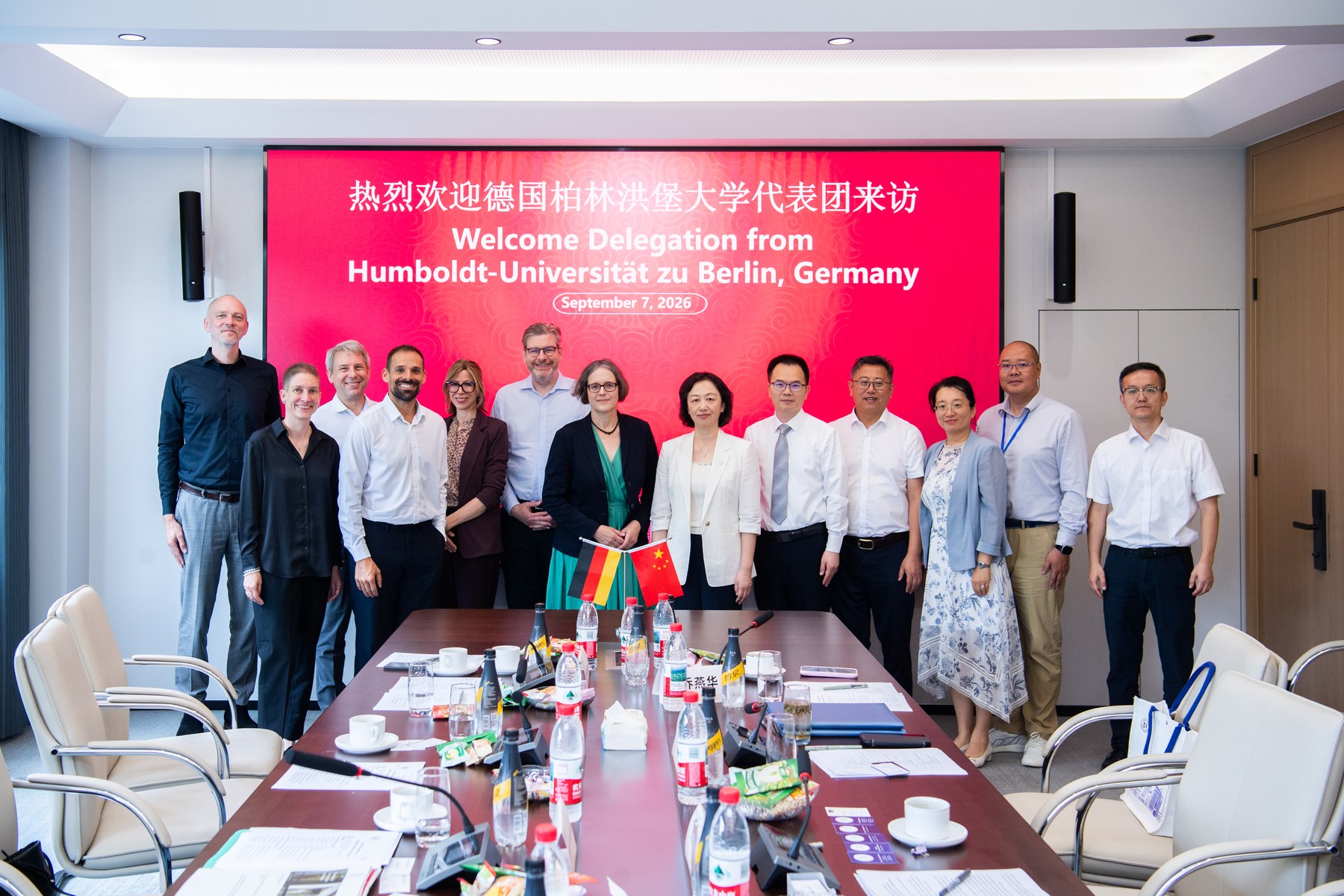
On September 7, 2026, a delegation led by Professor Julia von Blumenthal, President of Humboldt University of Berlin (HU Berlin), visited Lin-gang Campus of our university. Gong Siyi, SDJU President, met with the delegation, accompanied by Vice Presidents Yang Junjie and Wang Hongzhi. During the visit, the two universities introduced their respective institutions and signed a five-year inter-university MOU. Both sides also held in-depth discussions on the development of applied universities and the launching of an AI summer school. The visit marked a further step in advancing SDJU’s internationalization efforts and building new momentum for the implementation of its 15th Five-Year Plan.
1. Campus tour: showcasing an application-oriented learning environment
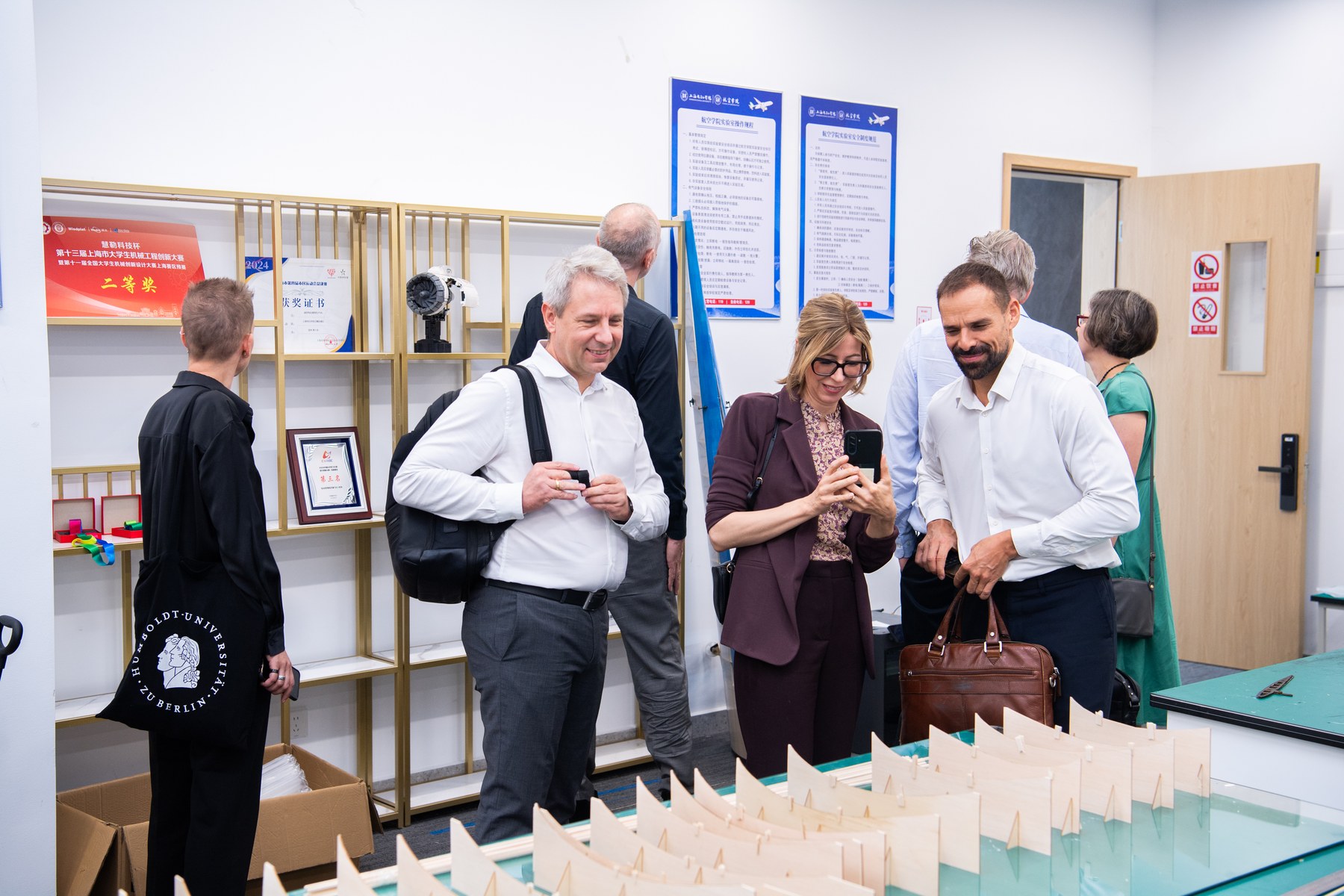
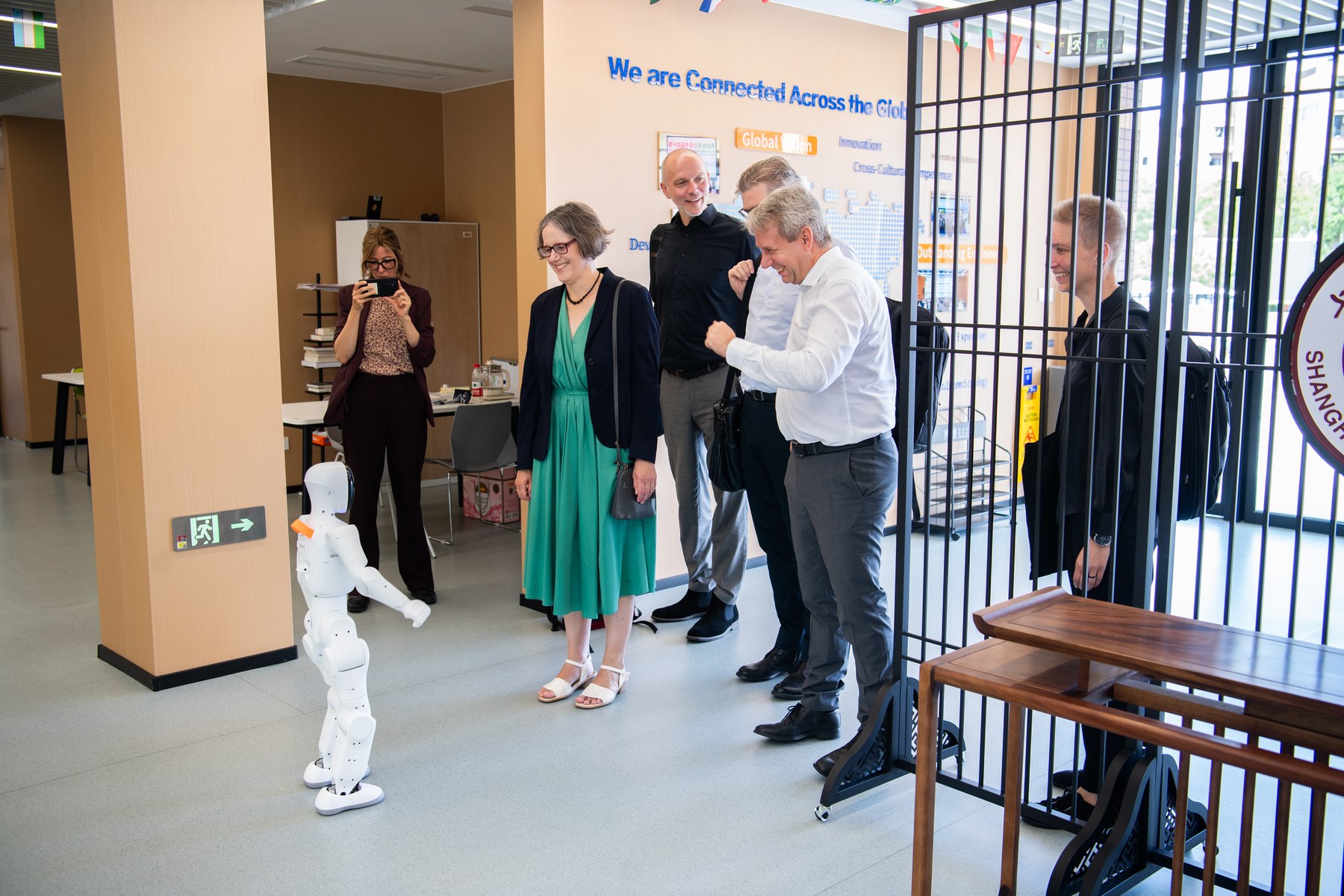
During the visit, the delegation toured the Aircraft Structures and Control Lab, the Joint Lab for Aircraft Manufacturing and Maintenance, and Aeromodelling Innovation Base at SDJU’s School of Aeronautics. The delegation learned about our practical training platforms developed around unmanned aerial vehicles (UAVs), intelligent aircraft, and related fields. The delegation then visited the Humanoid Robotics Lab in the Industry–Education Integration Building and viewed student projects, including robots and robotic dogs, presented by KKIP at the International Exchange Center.
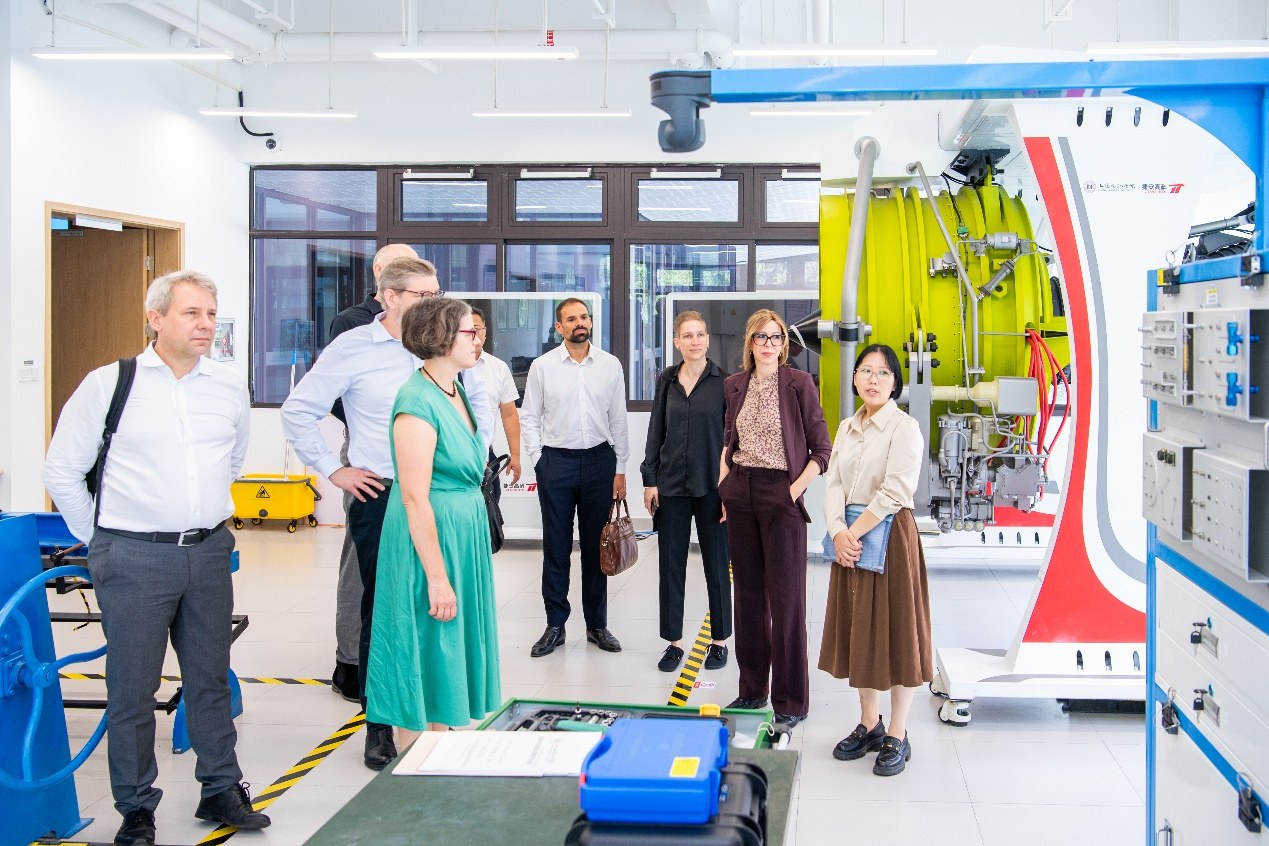
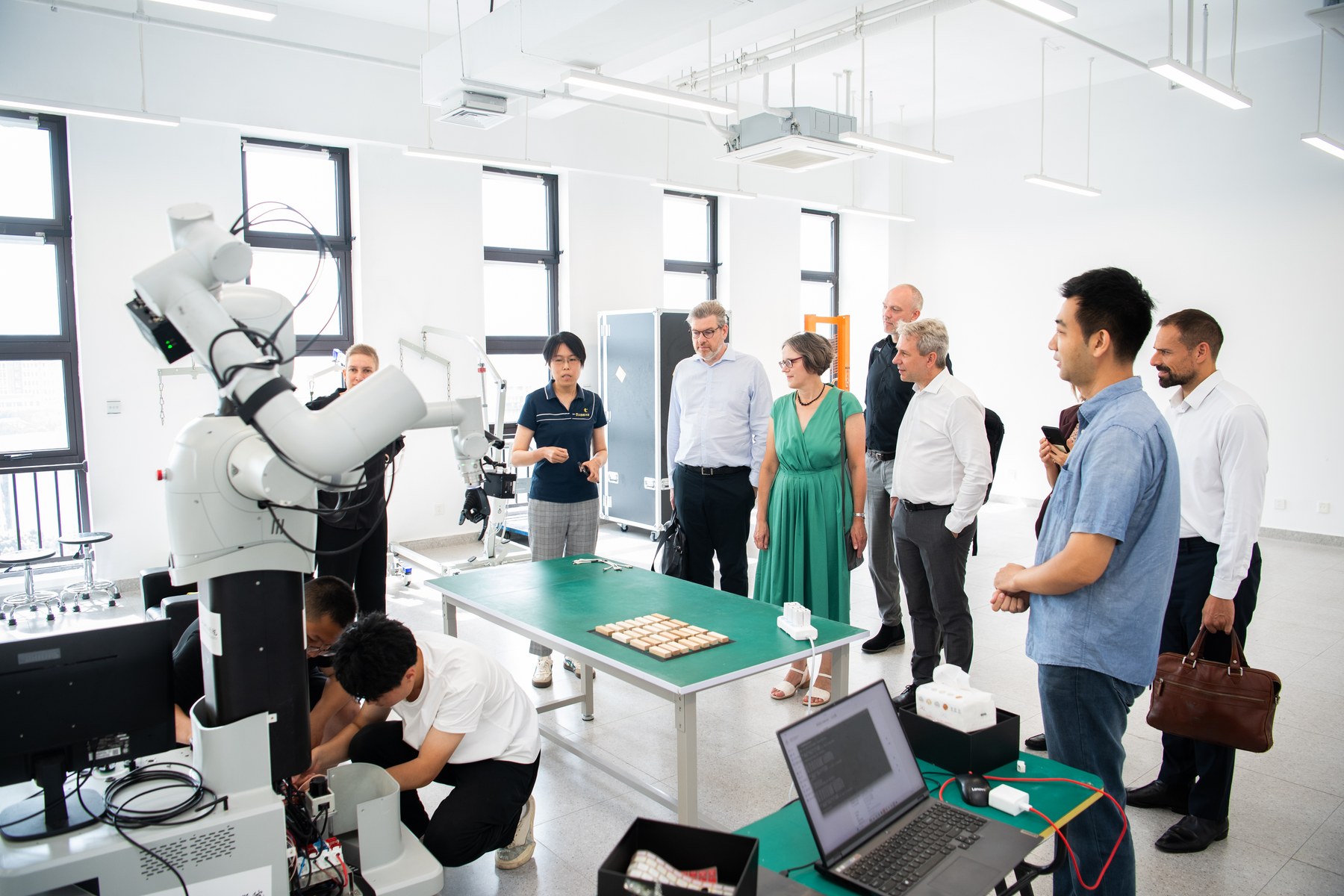
The campus tour provided a comprehensive overview of SDJU’s application-oriented educational environment, which emphasizes industry needs and hands-on engineering practice. The facilities and training platforms received positive feedback from the German delegation, giving its members a clearer understanding of SDJU’s approach to talent development and its practical training capabilities.
2. MOU signed to strengthen cooperation
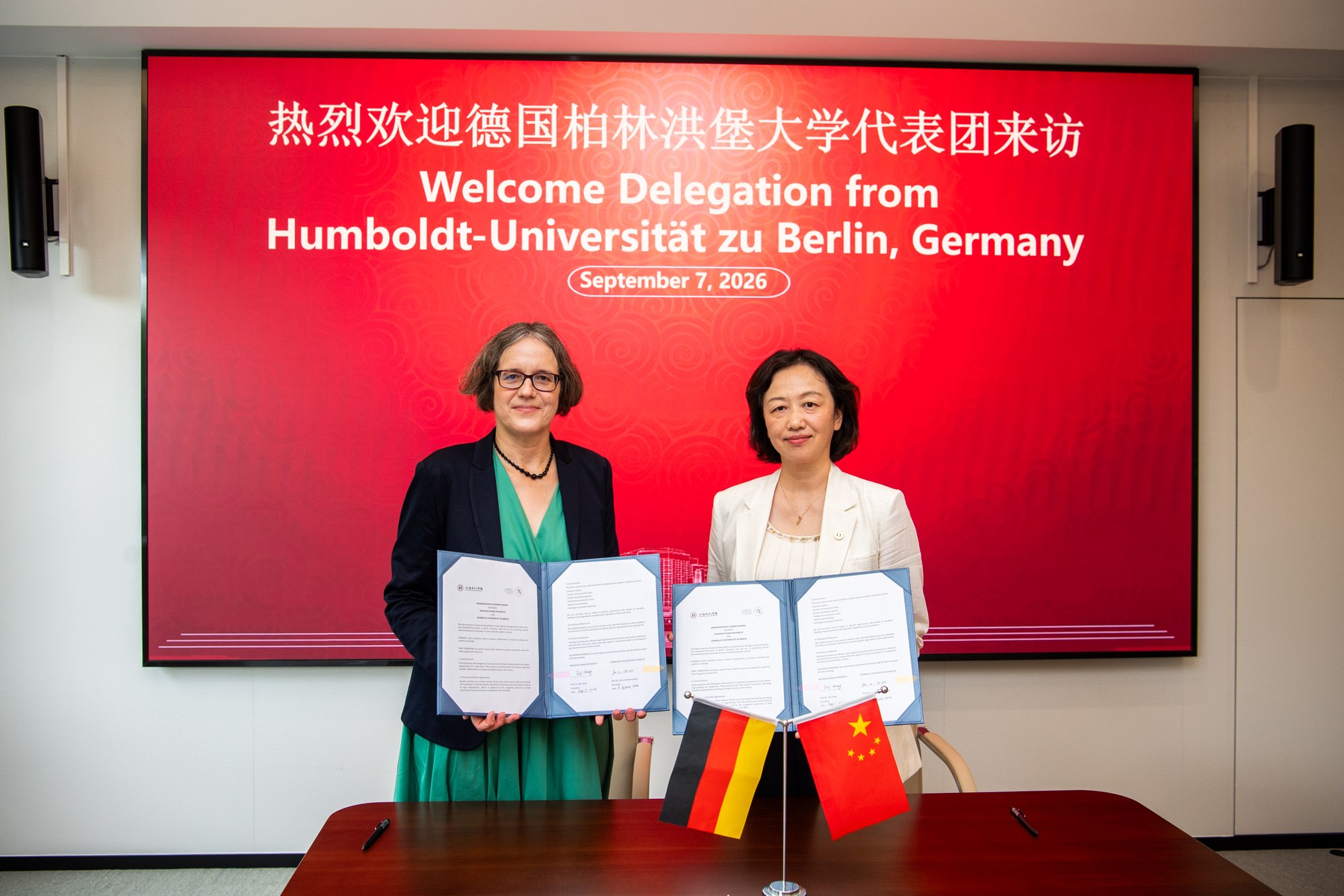
Following the campus tour, the two sides held a formal meeting. After introducing their respective institutions, both sides signed a five-year MOU, formally establishing a framework for collaboration in summer schools, faculty and student visits, student exchanges, joint academic activities, and research cooperation. Both sides expressed their expectation that the memorandum would serve as a new starting point for strengthening communication and expanding exchanges between the two universities.
3. In-depth discussions on applied universities and AI cooperation
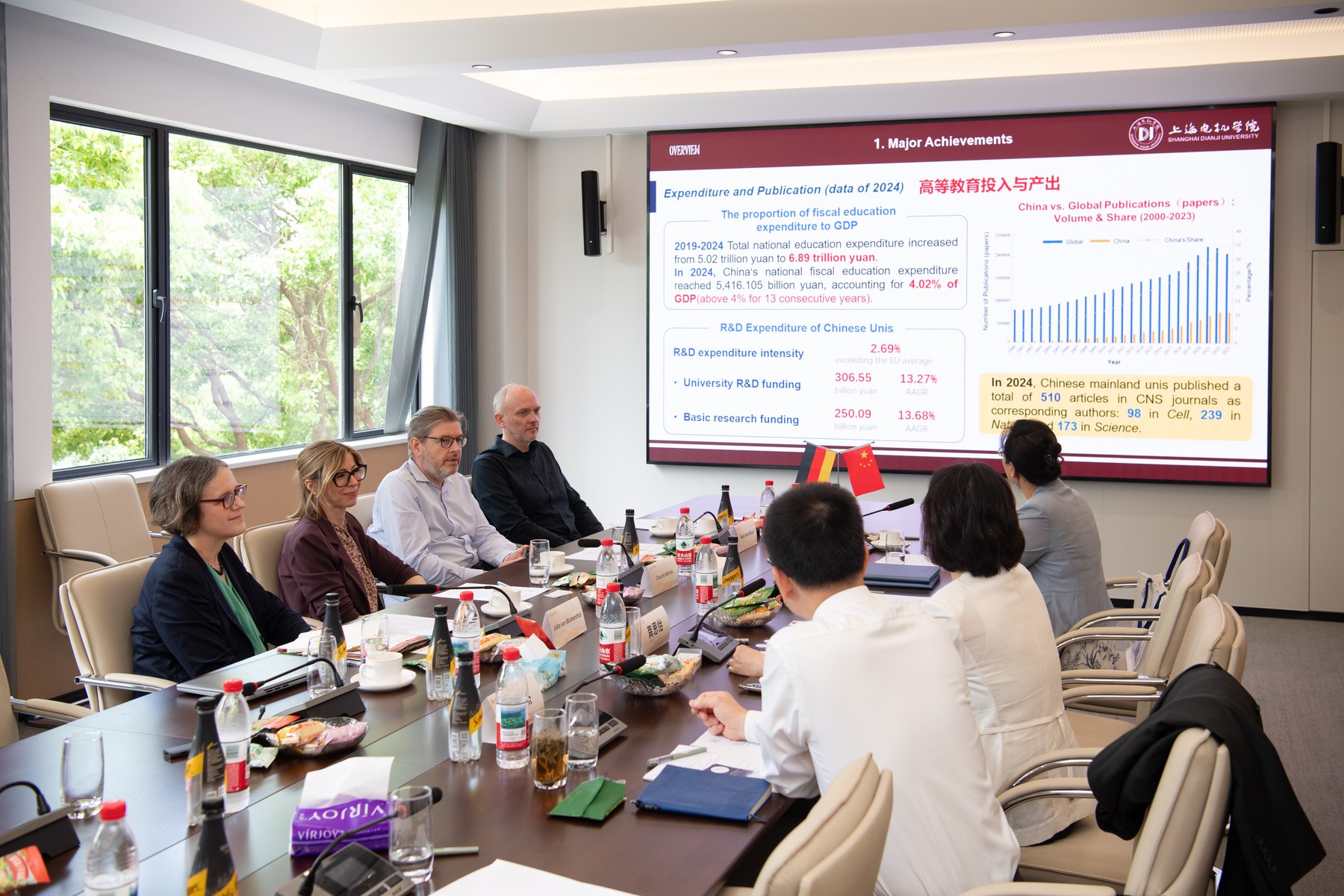
The discussions of the two sides were conducted in two areas. The first one being advancing building of applied university. As a research university, HU Berlin has traditionally had closer ties with Chinese research universities. However, following the visit of CCTC Science Delegation in March, HU Berlin developed a strong interest in China’s applied universities. This visit was intended to deepen its understanding of this area. At the meeting, President Gong gave an overview of China’s higher education institutions, its expenditure and publication, and the opportunities and challenges they face. She outlined China’s higher education development strategies and supporting policies, drawing on SDJU’s own experience and explained our mission to serve Shanghai’s advanced manufacturing industries and develop outstanding field engineers. She also introduced SDJU’s approaches to industry–education integration, practical strategies for cultivating applied talent, the optimization and adjustment of academic programs, and mechanisms for aligning talent development with evolving industry needs. The exchange further covered faculty development at applied universities and graduate employment. The German delegation raised questions and exchanged views on funding sources for research and teaching at applied universities, institutional autonomy, the proportion of faculty recruited from industry, the principles guiding the selection of priority development areas, and Chinese students’ attitudes toward employment.
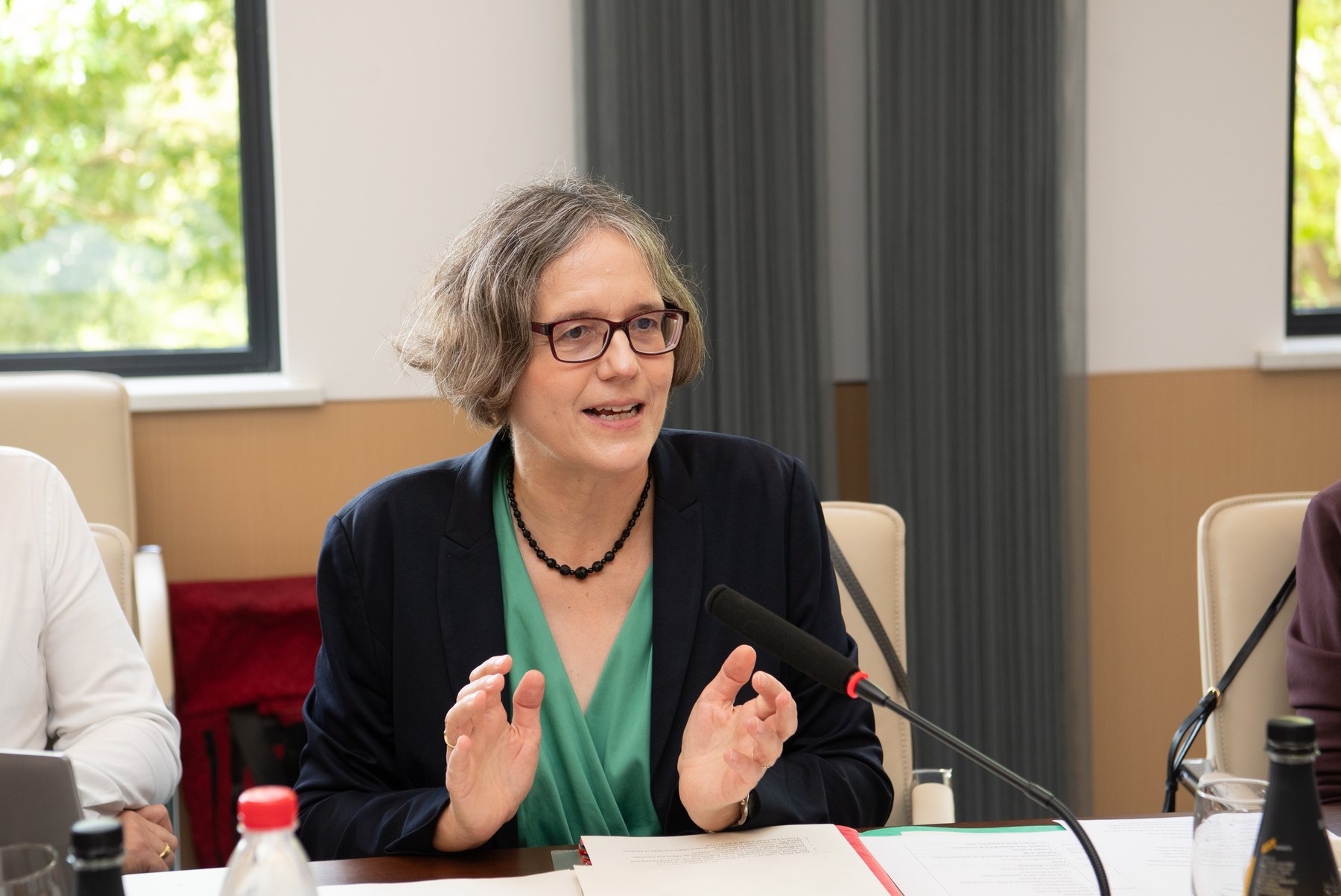
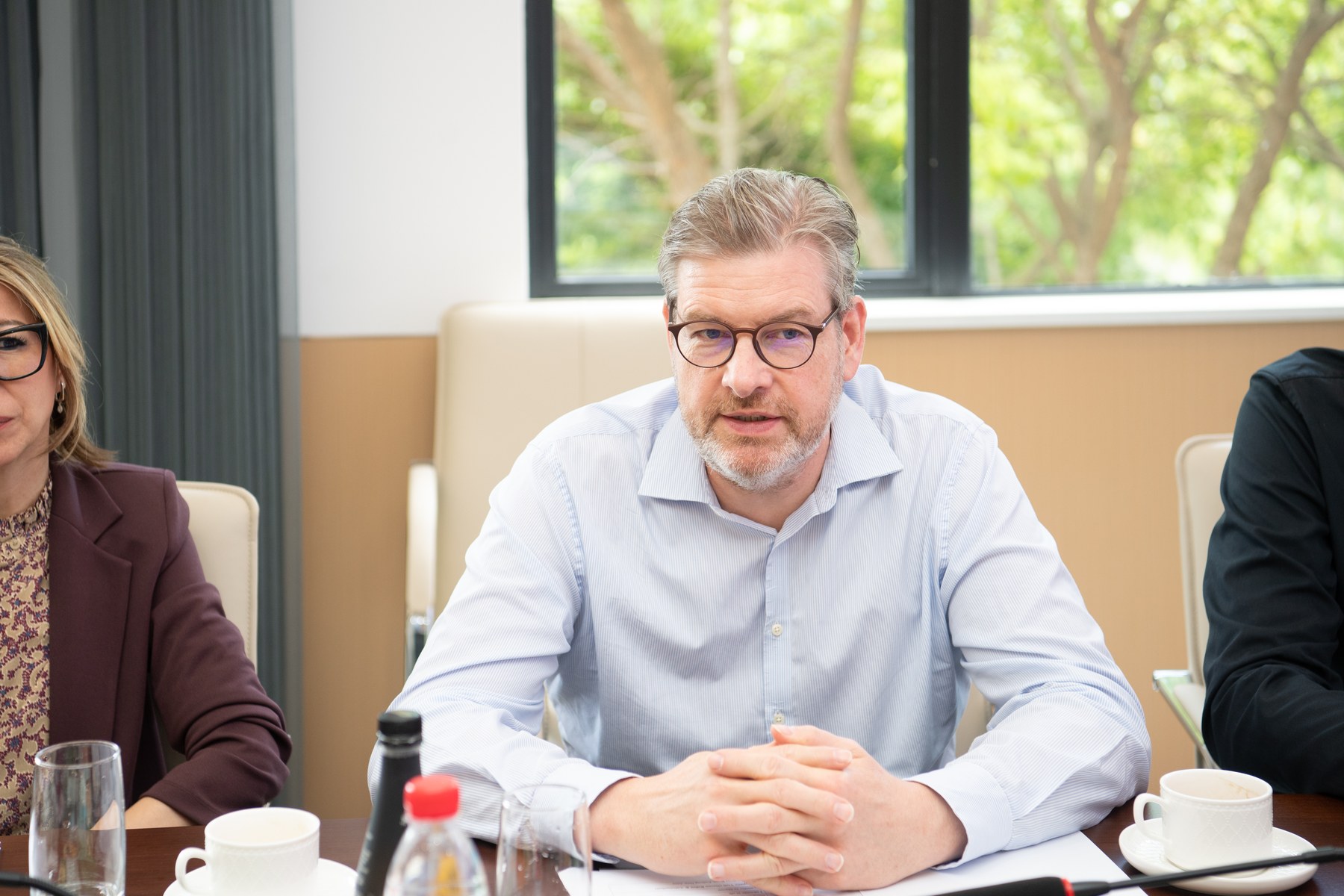
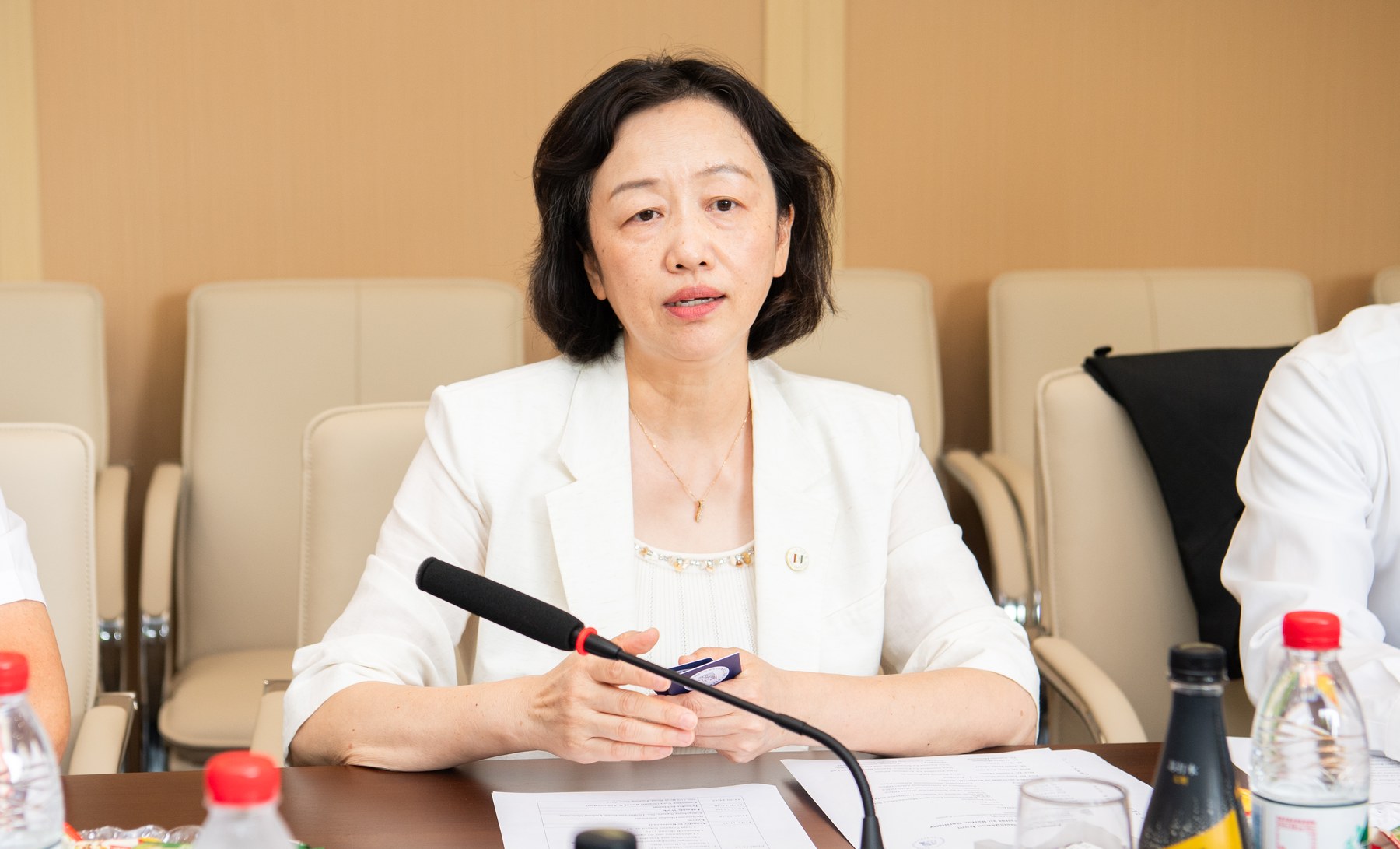
The second area in discussion focused on AI summer school. University leaders and academic representatives from both sides discussed potential models for the joint program and its practical implementation. SDJU proposed jointly establishing an AI summer school offering credits transferable within the European credit system, with KKIP and School of Artificial Intelligence and Data Science envisaged as the principal organizers. HU Berlin delegation offered specific recommendations on program size, curriculum design, and credit recognition. Both sides expressed an interest in developing a competitive summer school comparable to the European Union’s Erasmus+ program, creating a new pathway for German students to participate in academic exchanges in China.
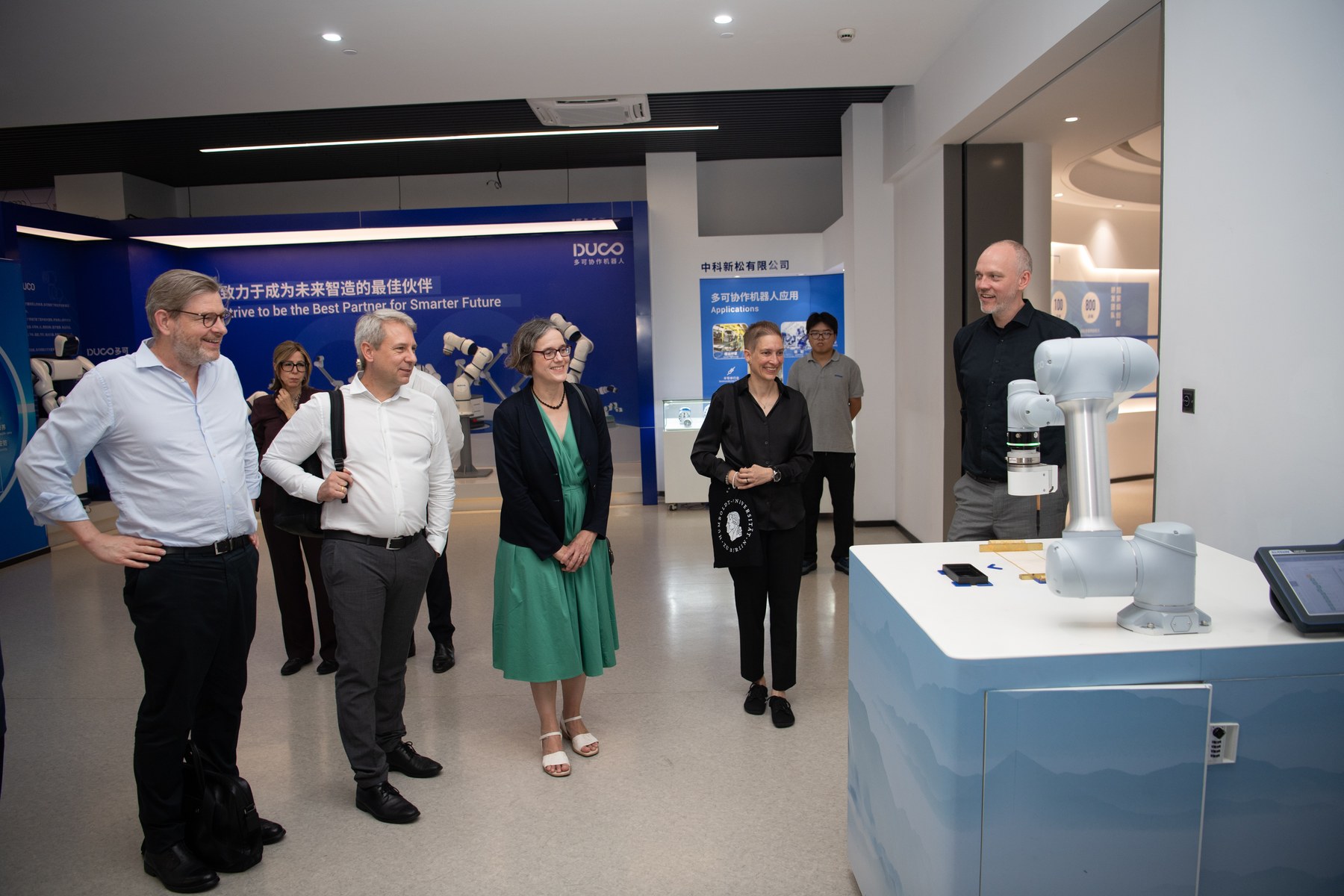
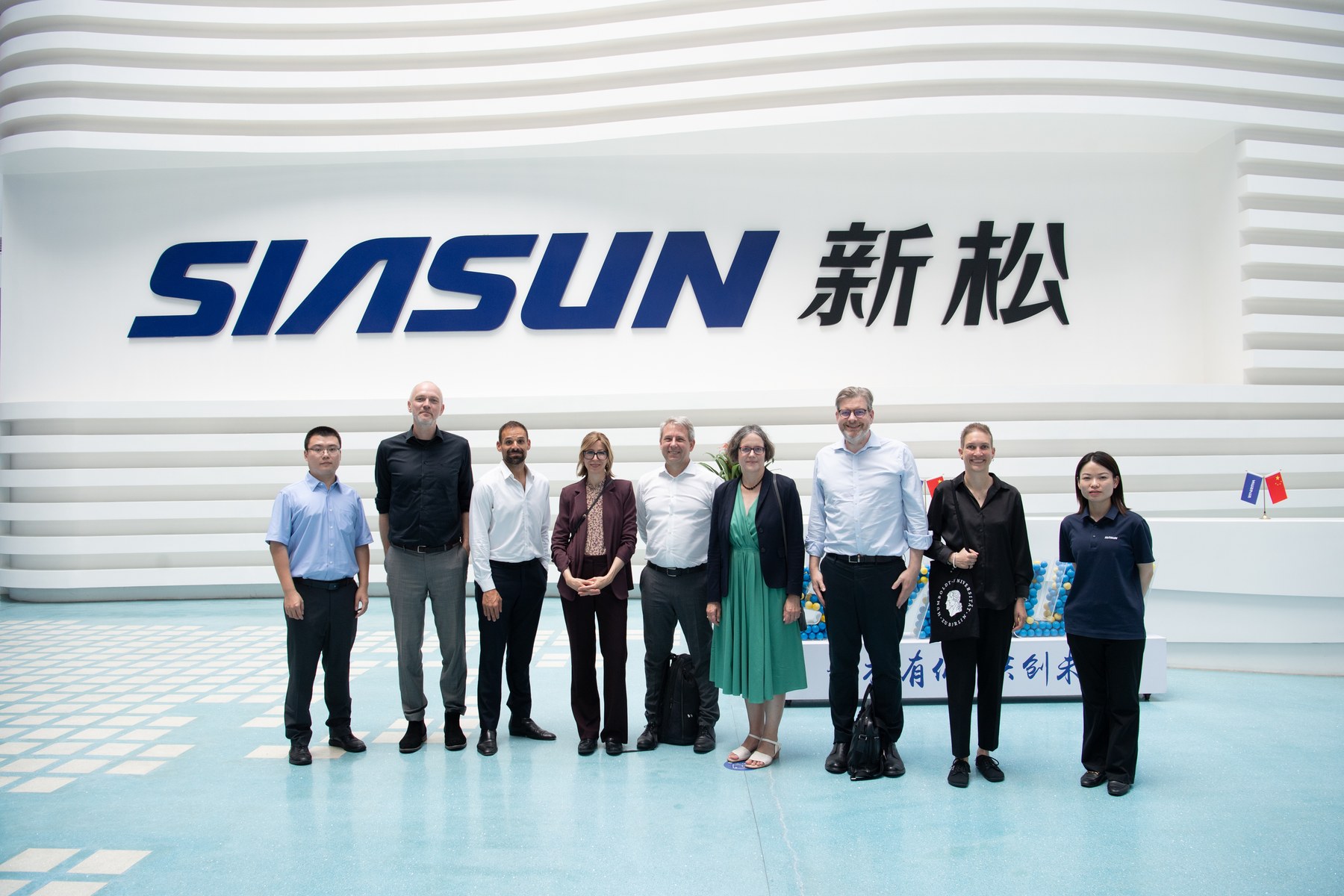
After lunch, the delegation visited Dishui Lake in Lin-gang and toured SIASUN Robot Co., a key industry partner of our university’s industry–education integration initiative.
4. Looking ahead: China–Germany cooperation to drive high-quality development
The visit yielded substantial outcomes, deepening mutual understanding and opening up new opportunities for cooperation in international engineering education, research collaboration, and industry–education integration.
Building on these achievements, SDJU will accelerate the implementation of collaborative initiatives, including the proposed AI summer school, and continue to strengthen practical cooperation with HU Berlin in talent development, faculty exchanges, collaborative research, and international engagement. By integrating high-quality international educational resources with its distinctive educational strengths, SDJU aims to provide stronger support for cultivating highly skilled applied professionals with global perspectives, practical engineering capabilities, and an innovative mindset. These efforts will also inject fresh international momentum into the university’s high-quality development under its 15th Five-Year Plan.
About HU Berlin
Located in Berlin, Germany, HU Berlin (Humboldt-Universität zu Berlin) was founded in 1810. It is widely regarded as the first modern university to integrate scientific research with teaching and is often referred to as the “mother of the modern university.” The university is a member of Germany’s Excellence Initiative. HU Berlin comprises nine faculties and has approximately 36,000 students. Its academic disciplines span the humanities and social sciences, natural sciences, life sciences, and medicine. Renowned scholars, including Albert Einstein, Max Planck, and Erwin Schrödinger, have studied or taught at the university.