
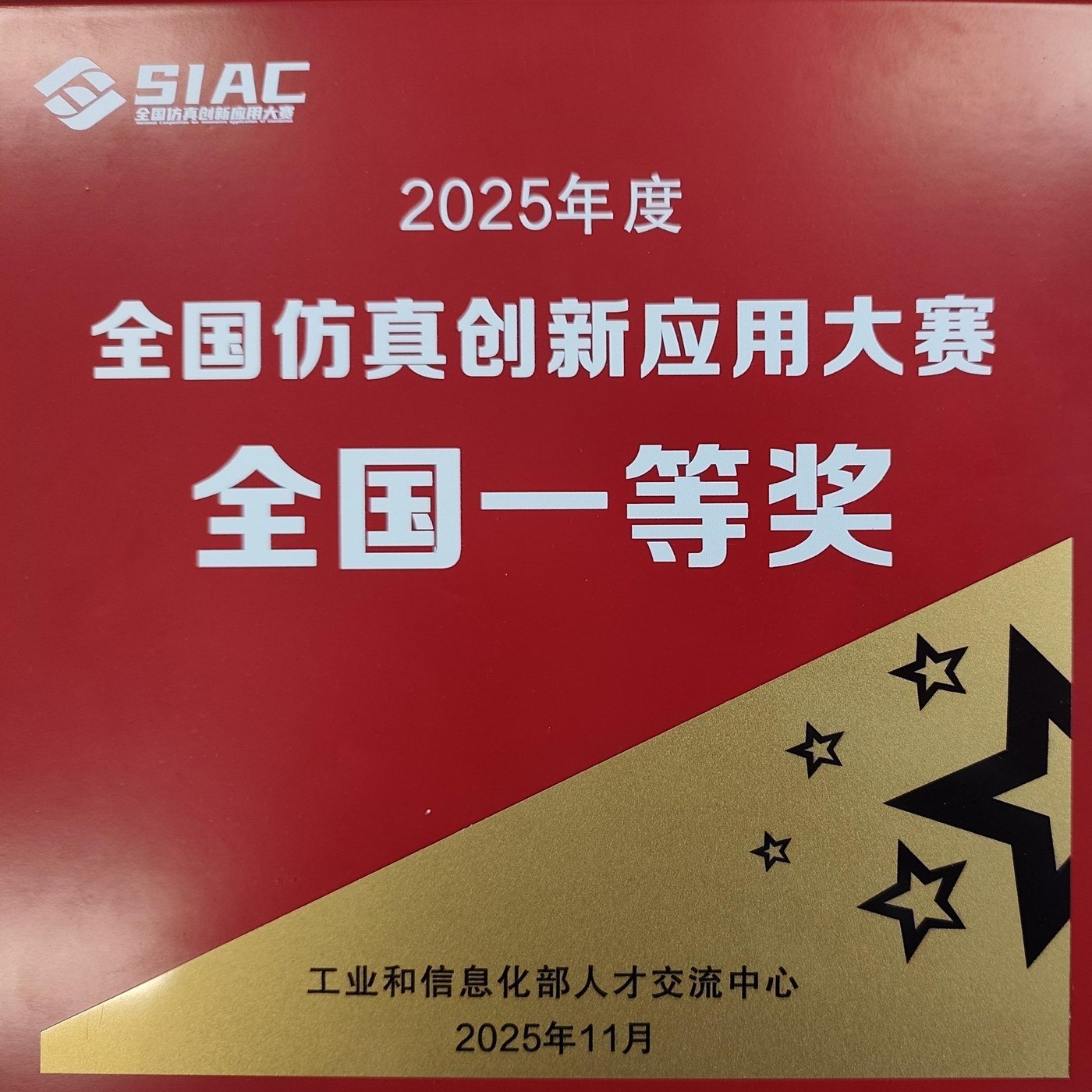
From November 21 to 23, 2025 Simulation Innovation Application Competition (SIAC) Finals were held at Wangjiang Campus of Sichuan University. The Advanced Control and System Engineering Lab of School of Electrical Engineering (SEE) won one first prize and one third prize. Among them, the team led by Associate Professor Wang Xichao won the national first prize in the Simulation Teaching Application Track for its independently developed Model-Based Comprehensive Teaching Practice Platform for Flight Control Systems. The project Research on Large Model-Based Modeling Methods for Flight Control Systems, led by SEE graduate students, won the national third prize in the Complex System Digital Simulation Track.
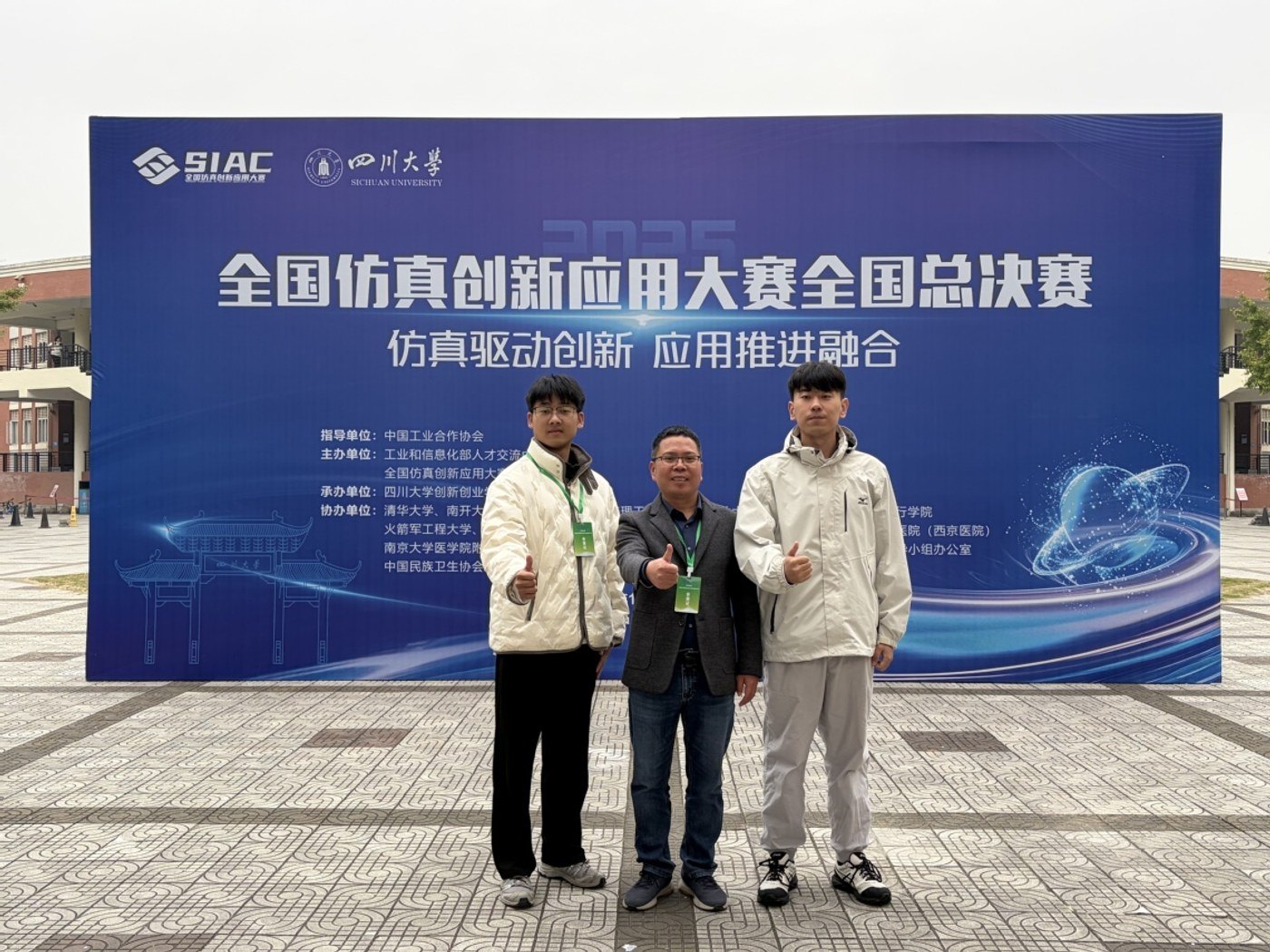
SIAC attracted active participation from more than 150 enterprises, 260 hospitals, and 300 universities nationwide. Featuring seven cutting-edge tracks, it is one of the most influential simulation innovation competitions in China. Launched in January, 2025 SIAC included three stages consisting of preliminary rounds, provincial-level finals, and national finals. After 11 months of competition and multiple rounds of selection, nearly 500 outstanding teams advanced to finals.
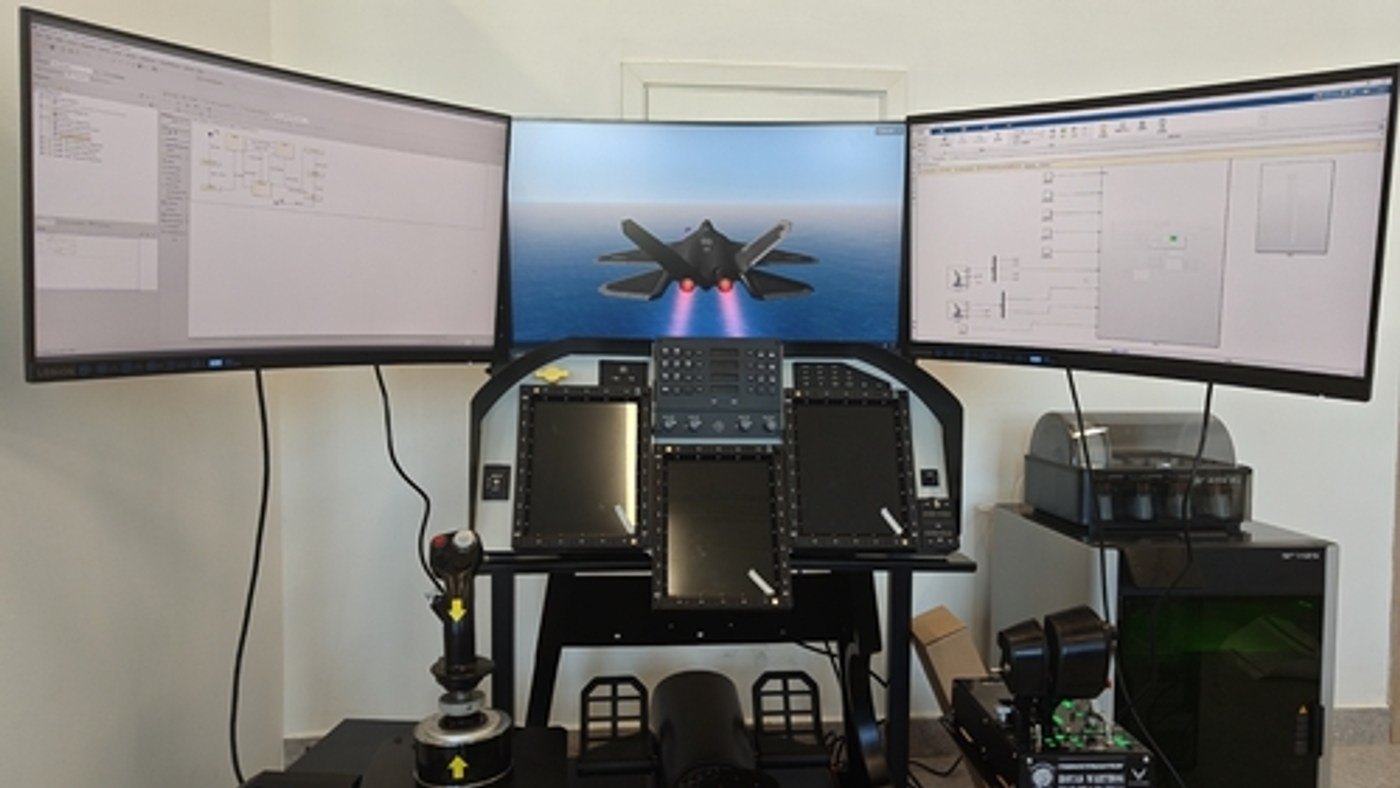
The award-winning Model-Based Comprehensive Teaching Practice Platform for Flight Control Systems is designed to support aerospace talent cultivation and features fully independent intellectual property rights. The platform has been deployed in several aerospace-oriented universities. It integrates aircraft control systems (including flight sticks, engine throttles, and rudder pedals), aircraft dynamic models, kinematic models, control law models, flight visualization, and flight fault simulation. By introducing model-based design (MBD) methodologies, the platform connects the entire technical chain from theoretical modeling and simulation verification to hardware deployment, enabling full-envelope flight testing and validation of aircraft operations, including takeoff, cruise, and landing. The platform innovatively integrates flight control system modeling and simulation with hardware-in-the-loop testing, allowing students to comprehensively master the processes of flight control system design, debugging, and optimization in an environment close to real engineering practice. It significantly transforms traditional control theory teaching methods and provides critical support for cultivating innovative talents with modern engineering capabilities.
The award-winning project Research on Large Model-Based Modeling Methods for Flight Control Systems represents a pioneering application of AI LLMs and Model-Based Systems Engineering (MBSE) technologies in the field of aerospace control. By leveraging AI large models and knowledge graphs for flight control system modeling and simulation, the project establishes a new paradigm for intelligent MBSE-based modeling empowered by artificial intelligence. It significantly improves the efficiency and quality of flight control system modeling, providing a new pathway and key support for the intelligent development of flight control systems.
The awards mark a breakthrough in domestic MBSE-based flight control system experimental platforms and demonstrates new progress made by our university in aerospace and AI research. SDJU will continue to develop research platforms related to aerospace technologies, leveraging simulation technology innovation to advance industrial technological progress and support high-quality development.